“Art just sort of found me. I’m not one of those people who said ‘I want to be an artist when I grow up.’”
— Bill Hutson, 2020
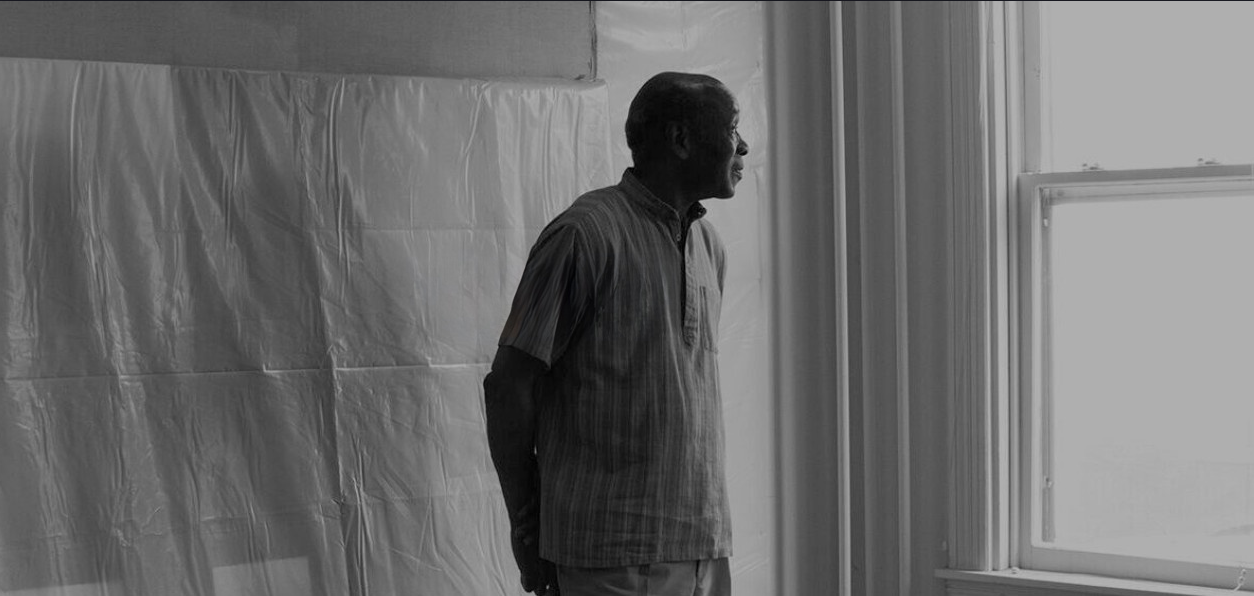
Bill Hutson was born in San Marcos, Texas in 1936. His mother was a custodian, and his father, who died when Hutson was four, was a musician who played in churches and clubs. Despite the lack of artistic influence which characterized his childhood years, an early interest in the craft was undeniable. Hutson's first foray into the world of art occurred when he was a teenager, when he responded to an advertisement in the newspaper: a picture, along with the instructions, 'Draw Me.' He won a prize in the competition, and entry into an art correspondence course. The experience led him to submit a cartoon to the San Marcos Daily Paper, which saw publication.Ten years after the death of his father, Hutson's mother passed away. He was moved, along with his siblings, to live with relatives in San Antonio. Hutson studied at the San Marcos Colored High School until 1952, finishing his high school diploma at the Phyllis Wheatley High School in San Antonio in 1956. Alongside his public education, Hutson studied drawing, design, and color theory from 1951-1955 with the assistance of Art Instruction Inc., a correspondence school. After graduation, he enlisted in the U.S. Air Force, where he became a sergeant working with airborne radar systems. While in the Air Force, Hutson enrolled in a drawing course at the University of New Mexico, continuing with the artistic explorations of his youth.Following an honorable discharge, Hutson moved to Los Angeles, where his brother and uncle were living. He sought to apply for a job at a company that made airborne radar systems, the same ones he had worked with during his years in the air force. Though his qualifications for the position were undeniable, the color of his skin denied him the ability to work. Instead, he found work as a file clerk at Golden State Mutual Life Insurance Company. The company hosted an expansive collection of African and African American visual arts, which served as Hutson’s first exposure to fine art. Shortly after, he moved to San Francisco.In San Francisco, Hutson embraced his artistic interests, making both figurative and abstract paintings. He had very little formal training, though between 1960 and 1961 he briefly studied commercial art at the San Francisco Academy of Art. From 1960 to 1962, he was an assistant to Frank N. Ashley, a realist painter who had studied and assisted under Reginald March at the Art Students League in New York. The apprenticeship introduced Hutson to the art of Sargent Claude Johnson, David Park, Elmer Bischoff, Joan Brown, Richard Diebenkorn, Frank Lobdell, Deborah Remington, and others. At this time, he also exhibited his works in the John Bolles Gallery, Fred Maxwell Gallery, and at the San Francisco Museum of Modern Art.Life in San Francisco also led Hutson to spend time at the legendary City Lights Bookstore, where Lawrence Ferlinghetti helped introduce him to European writers and artists. He read and met many of the generation’s Beat writers and interacted with the Black Panthers. Hutson often allowed Black students from Berkeley to gather at his studio on 17th Street.In 1962, Hutson left San Francisco and made his way to London for a brief stint, followed by extended stays in Amsterdam and Paris. In his time traveling, he began to move in a circle of fellow abstract expressionist painters. Drawn to the implicit rather than the explicit, Hutson was never an artist to shout aloud political messages. However, the titles of his works reveal his ongoing, consistent engagement with the ugliness and upheaval that marked life for an African-American man in the US in the 60s.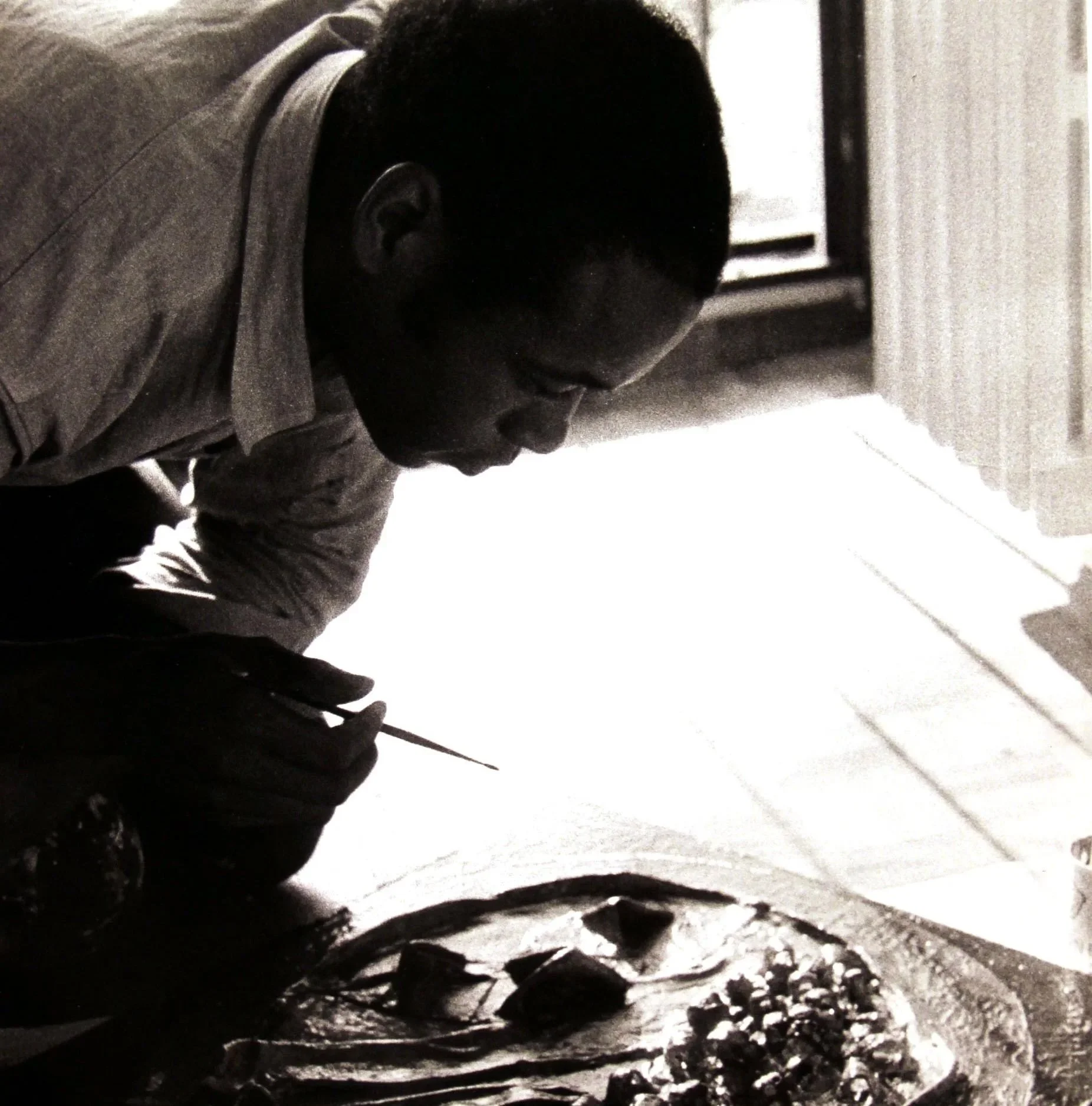
Hutson in his Paris Studio, 1963. Photo by Ed Barnett.
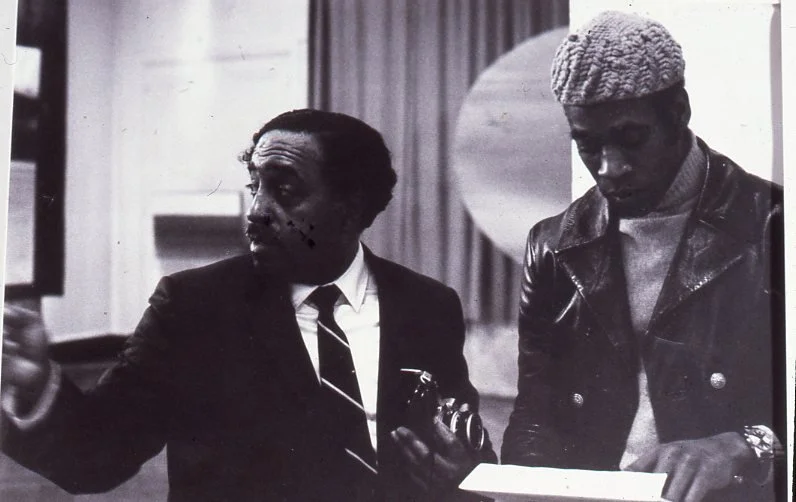
James E. Lewis and Bill Hutson, 1969.
“I was interested in abstract expressionism even when I was working with Frank [Ashley], who had no patience with abstracts.”
— Bill Hutson, 2020
From 1962 to 1971, Hutson traveled and painted in London, Paris, Amsterdam, Rome, Ibadan and New York. During his travels, he met Ed Clark and Sam Middleton with whom he showed at the American Center in Paris in 1969. With his return to the US in 1971, he reunited with Joe Overstreet– whom he had met during his time in San Francisco– and subleased Overstreet's studio in the Bowery in New York. At this time he met Al Loving, Bob Blackburn, Vivian Browne, Frank Bowling, Peter Bradley, Melvin Edwards, Robert Indiana, James Little, Kenneth Noland, Howardena Pindell, Robert Rauschenberg, Larry Rivers, Haywood (Bill) Rivers, William T. Williams, and Jack Whitten. They were Hutson’s “neighbors” and interlocutors in SoHo and midtown Manhattan, many of whom remained lifelong friends.In 1972, a Cassandra Foundation Award took him back to France, this time to Uzés. The following year, he returned to the United States working at the Southwest Crafts and Creative Arts School in San Antonio. An National Endowment of Arts award a year later took him back to France. Later that same year, he moved to Nigeria at the invitation of Ola Balogun, where he served as the Graphic Arts Officer at the National Museum in Lagos until 1976. During his time in Europe and West Africa, Hutson met and associated with fellow artists Iba N’diaye, Souleymane Keita, Joan Mitchell, Beauford Delaney, and Barbara Chase-Riboud. He had significant contact with Roberto Matta-Echaurren, through whom he met Max Ernst and Wifredo Lam while completing an edition of etchings at the Georges Visat Printmaking Workshop in Paris.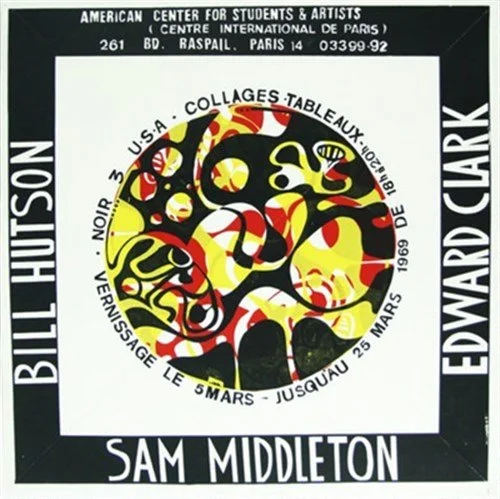
Noir 3. Bill Hutson, Sam Middleton, and Ed Clark show at the American Center in Paris, 1969.
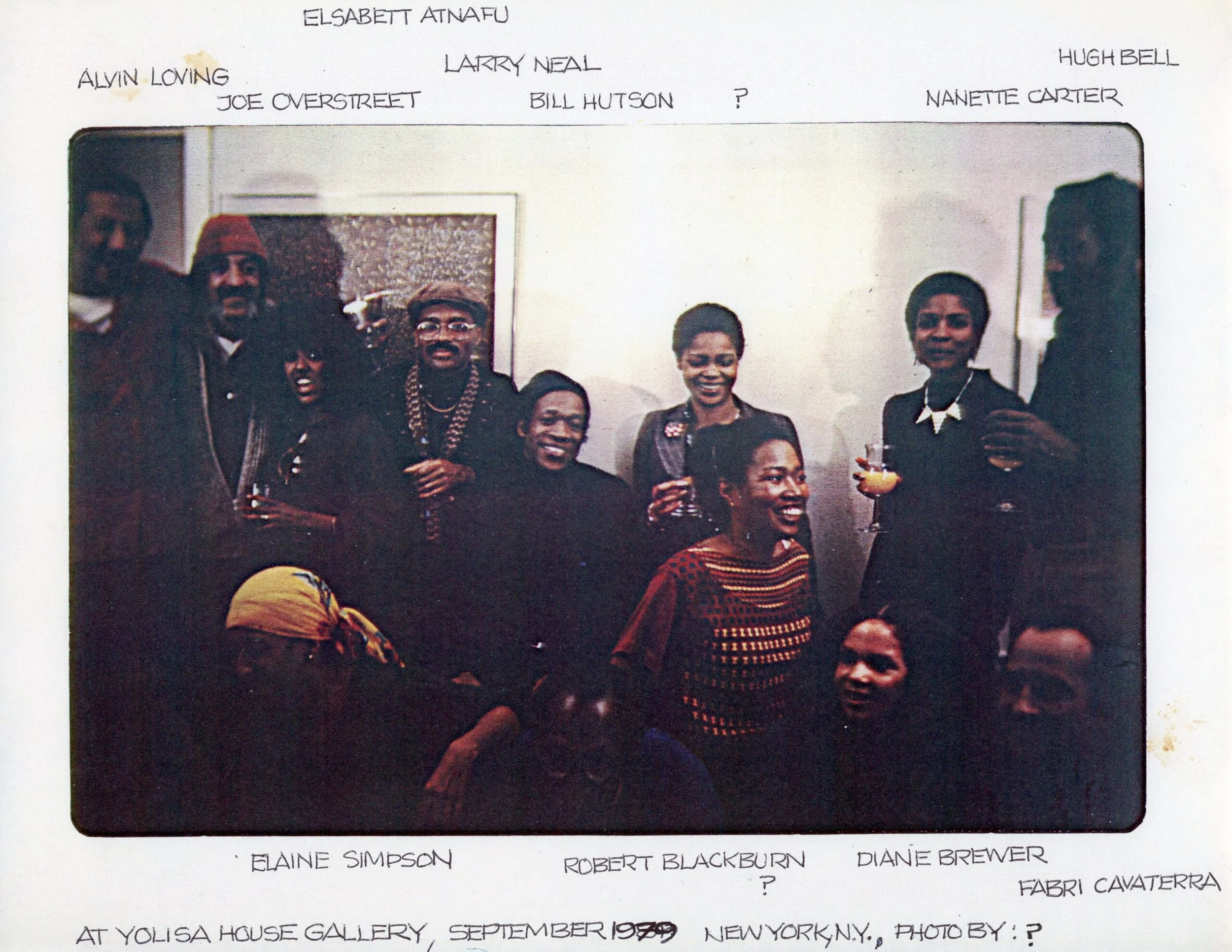
Yolisa House Gallery September, 1979. Group Picture. Names handwritten by Hutson.
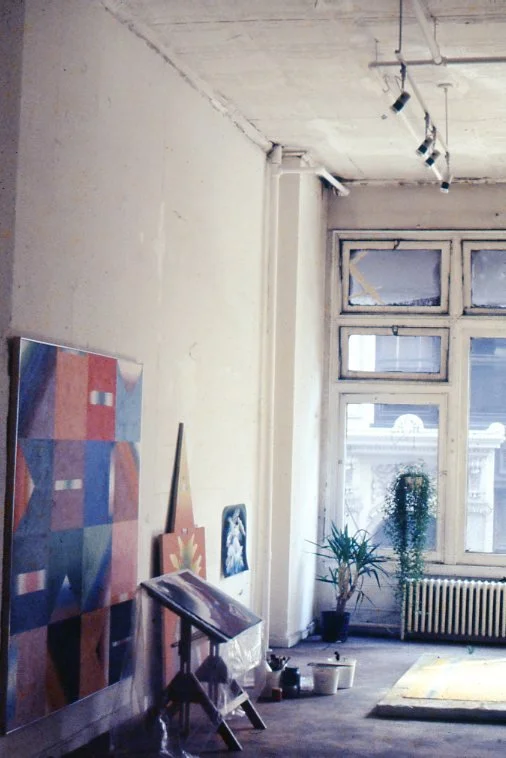
Paintings in Hutson's W. 20th Street Studio, NYC 1980.
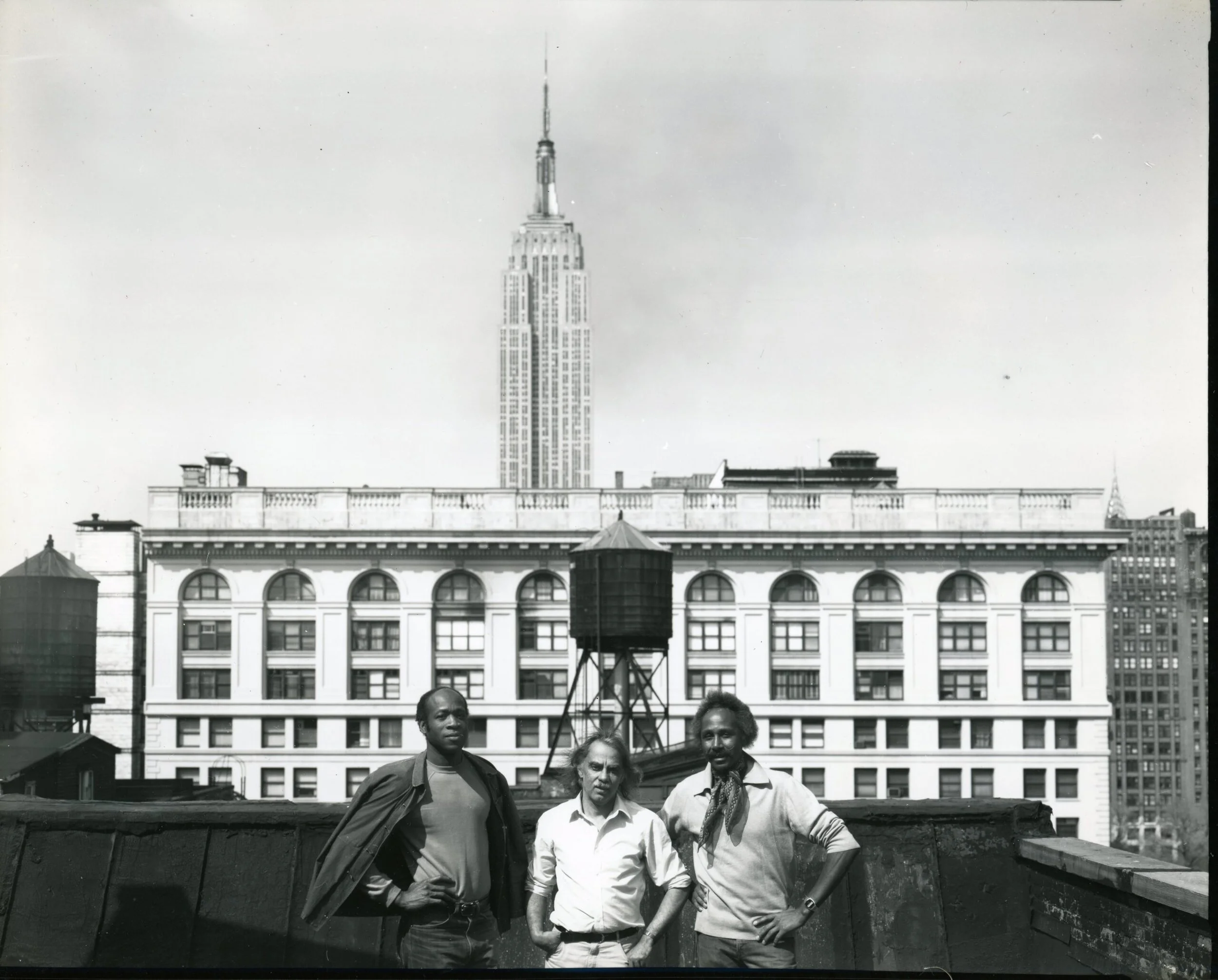
Hutson with Ed Clark and Adger Cowans, terrace of Ed Clark's Studio, New York 1980. Photo by Adger Cowans.
Throughout his life, Hutson displayed his work regularly, with exhibits in the Netherlands, the Ivory Coast, New York, Nigeria, Yugoslavia, Italy, Japan, Ohio, Kentucky, New Jersey, and Pennsylvania. From 1979 to 1983, Hutson taught part-time at Hunter College of the City University of New York. This was followed by a position at Ohio State University from 1984 to 1987, followed by a stint at John Hopkins University. In 1989, he began teaching at Franklin & Marshall College in Lancaster, Pennsylvania, where he taught courses covering African-American art history and studio art. He left in 1996 for France, returning in 1999 to resume a teaching position as a Visiting Associate Professor of Art. In 2005, he became the Jennie Brown Cook and Betsy Hess Cook Distinguished Artist-In-Residence, a position he held for the rest of his life.As part of his position, Hutson was invited to curate several exhibitions. He focused, in particular, on African-American artists with an interest in abstraction. His show, “Something To Look Forward To,” brought together twenty-two painters of African descent, all over the age of 60, who had committed to abstraction for the duration of their careers. The highly developed skill demonstrated by these practitioners had often been overlooked by the gallery world which celebrated the “new.” “Something To Look Forward To” opened at the Philips Museum of Art at Franklin & Marshall College in 2004 and subsequently traveled to seven other sites.In 2000, Hutson was diagnosed with severe advanced glaucoma and declared legally blind. He had already lost his ability to see colors. However, he continued making art, using a magnifying glass to read the color on a paint jar and then painting from memory. His last series of abstract artwork was completed two years before his death.Hutson’s approach to abstraction was expansive. Early paintings rely on an Africanesque vocabulary; these were followed by three-dimensional paintings, collages and scrolls. Many of his pieces have moveable parts where wood is covered in textured canvas. Viewers are invited to alter the piece by moving segments as they wish. His paintings are consistently concerned with materials and texture. Hutson's last paintings, made after he lost his vision, return to the architectural forms of his early work but with the distinct luminosity of a fresh period.Hutson's work is held in numerous private and public collections, including the National Museum of Arts in Havana, The Brooklyn Museum of Art, The Georges Visat Collection in Paris, The Studio Museum of Art in Harlem, The Newark Museum, The San Francisco Museum of Modern Art, Museum Boijmans Van Beuningen in Rotterdam, The Pennsylvania Academy of Fine Arts, Centre Pompidou, and the Petrucci Family Foundation Collection.Hutson passed away in 2022, at the age of 86.“I’m still painting, but I paint what I know rather than what I see.”
— Bill Hutson, 2020